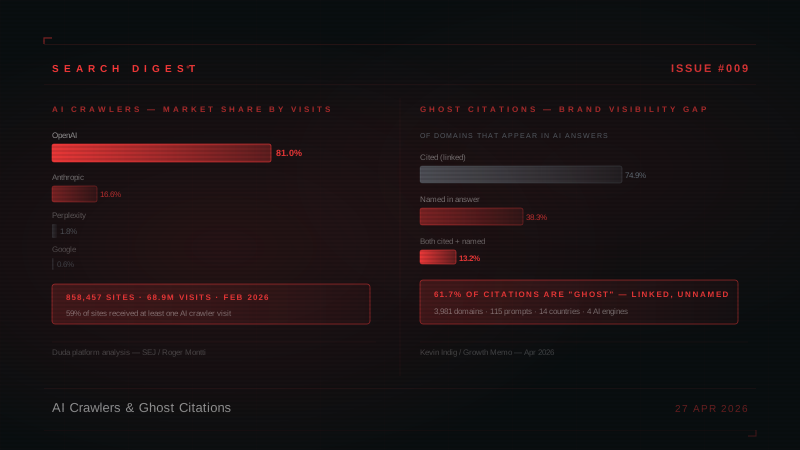
Kevin Indig / Growth Memo
The Ghost Citation Problem
Kevin Indig defines a ghost citation as what happens when an AI system uses your content, provides a source link, but never mentions your brand name in the answer text. Analysis of 3,981 domains across 115 prompts, 14 countries, and 4 AI engines finds that 74.9% of domains received citations, but only 38.3% were mentioned by name. Of all citations in the dataset, 61.7% were ghost citations: linked, anonymous, and invisible to the user unless they clicked through to check. Only 13.2% of appearances resulted in both a citation and a mention.
The behaviour varies sharply by AI engine. ChatGPT cites 87% of the time but names brands in just 20.7% of cases. Gemini does the opposite: it names brands in 83.7% of cases but only cites 21.4%. The content type matters too. Comparative and evaluative content, pages that explicitly compare options or recommend one over another, generates brand mentions. Informational content feeds AI engines anonymously. The geographic variation is also notable: mention rates range from 50% in India and Sweden down to 18-22% in Italy, Brazil, and the Netherlands.
Key points
- 61.7% of LLM citations are ghost citations: the AI links to the page but never names the brand in its answer
- Only 13.2% of appearances result in both a citation link and a brand name mention
- ChatGPT cites 87% of the time but names brands in only 20.7% of cases
- Gemini names brands in 83.7% of cases but cites only 21.4% of the time
- Comparative and evaluative content generates mentions; informational content earns citations without attribution
- Dataset: 3,981 domains, 115 prompts, 14 countries, 4 AI engines
Key takeaway
Being cited by AI is not the same as being known. Getting linked without being named means users receive your information without knowing who provided it. Shifting content toward comparison, evaluation, and recommendation formats, where AI naturally attributes the source by name, is the practical way to close the gap between citation rate and actual brand visibility.
Also worth considering
The Gemini and ChatGPT split makes the optimisation problem LLM-specific rather than universal. A strategy focused entirely on earning ChatGPT citations may be building a large ghost citation footprint. Knowing which AI engines your audience uses most, and how each one handles brand attribution, makes GEO work more targeted rather than treating all AI visibility as equivalent.
What I'm testing
Querying ChatGPT and Gemini directly for target questions and noting whether citations include brand name mentions or just links. Where ghost citations appear, the page is likely informational. Testing whether adding explicit comparison statements and recommendation language to those pages shifts them from anonymously cited to named in the answer.