Google / blog.google
How AI Mode Is Changing and Expanding the Way People Search
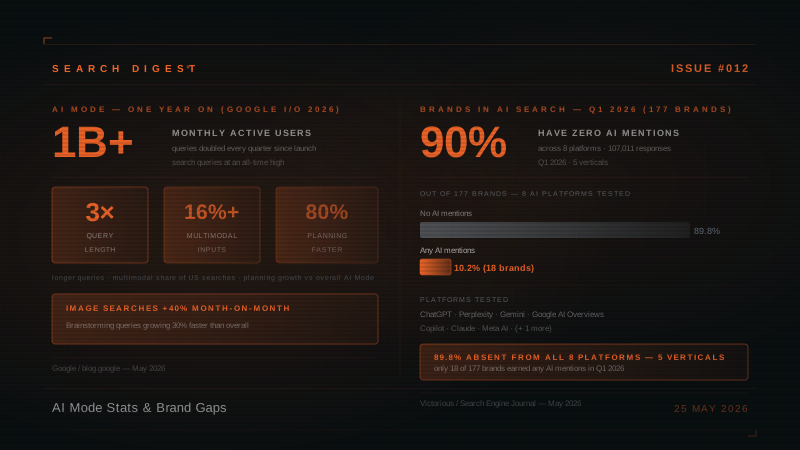
The official first-party numbers arrived on 19 May as part of the Google I/O announcements. AI Mode has over 1 billion monthly active users globally, with queries more than doubling every quarter since launch. The query length data stands out: the average AI Mode search is three times longer than a traditional Google query. More than one in six searches in the US now uses voice or image input, and image searches grew 40% month-on-month. These are not third-party estimates. They are Google's own measurements shared publicly at I/O for the first time.
The planning query data shows something useful about changing intent patterns. Queries related to planning grew 80% faster than overall AI Mode usage in the past six months. Brainstorming queries grew 30% faster. What this points to is that people are bringing longer, more exploratory, more multi-step questions to AI Mode than they ever brought to traditional search. A page that answers a single keyword phrase and stops will satisfy a traditional search result. It will not serve someone asking a planning question in AI Mode, where the follow-up questions are part of the same session. Content built to support a full intent journey, not just a single query, is better positioned as AI Mode grows.
Key points
- AI Mode has over 1 billion monthly active users globally after one year, with queries doubling each quarter since launch
- Average AI Mode query is three times longer than a traditional Google search
- More than 16% of US searches now use multimodal inputs: voice, images, or files
- Image searches in AI Mode grew 40% month-on-month
- Planning queries grew 80% faster than overall AI Mode queries in the past six months
- Brainstorming queries grew 30% faster than overall queries; Google reports search volume is at an all-time high
Key takeaway
Content structured to answer extended, exploratory questions is better placed as AI Mode grows. If your pages answer a single question and stop, they may satisfy a traditional search intent but miss the follow-up questions AI Mode users ask in the same session. Build content that supports a planning journey rather than a standalone query, and make sure the most important claims appear early, since AI Mode users are asking questions that require the answer quickly rather than reading to a conclusion.
Also worth considering
The query length increase has implications for keyword research. Keywords drawn from traditional Search Console data, where queries average two to three words, will not reflect how users phrase questions in AI Mode. If you are building a prompt tracking strategy alongside traditional keyword research, the prompts should reflect the more conversational, intent-driven format that AI Mode users actually use, not a compressed keyword version of the same question.